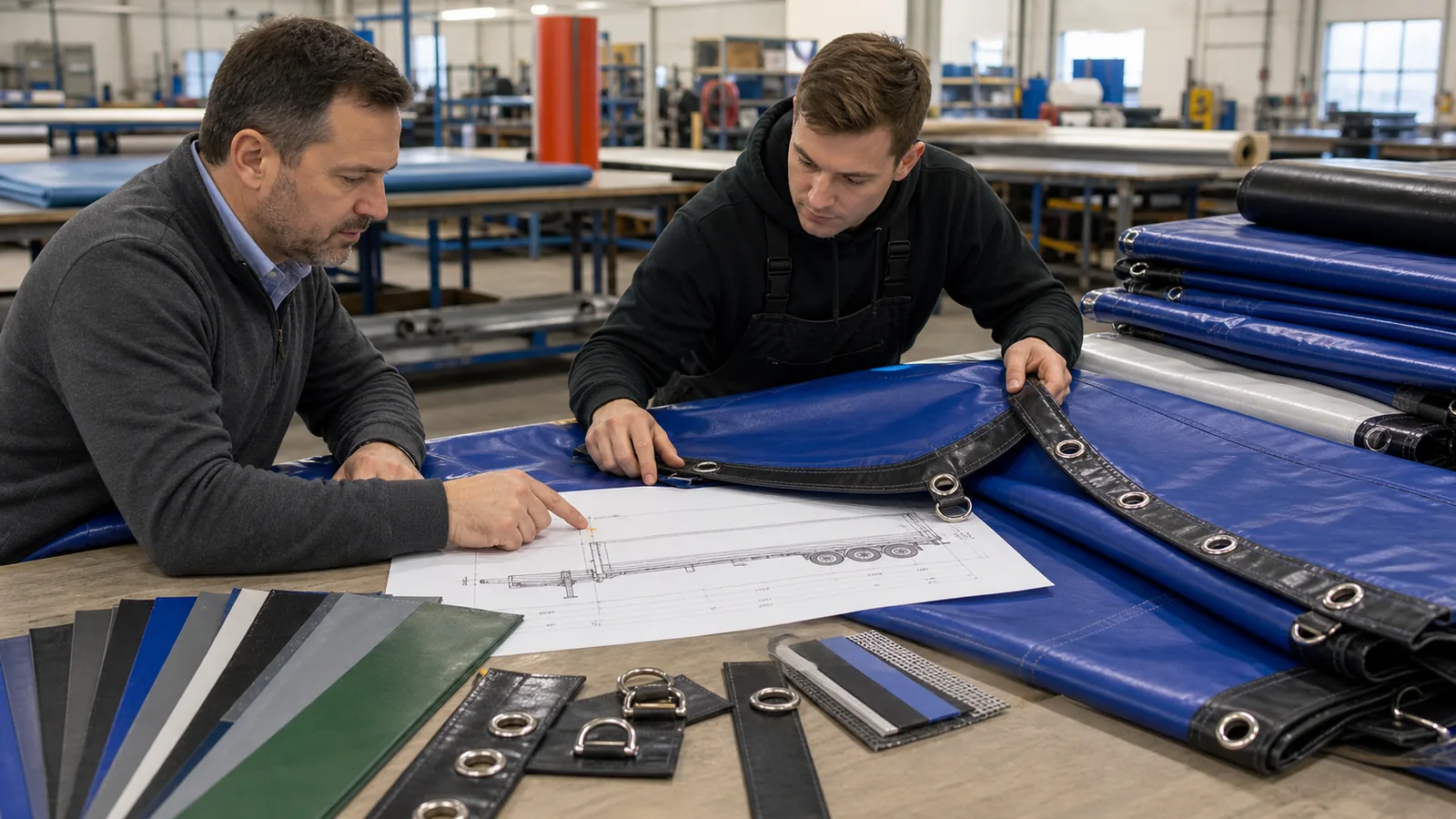
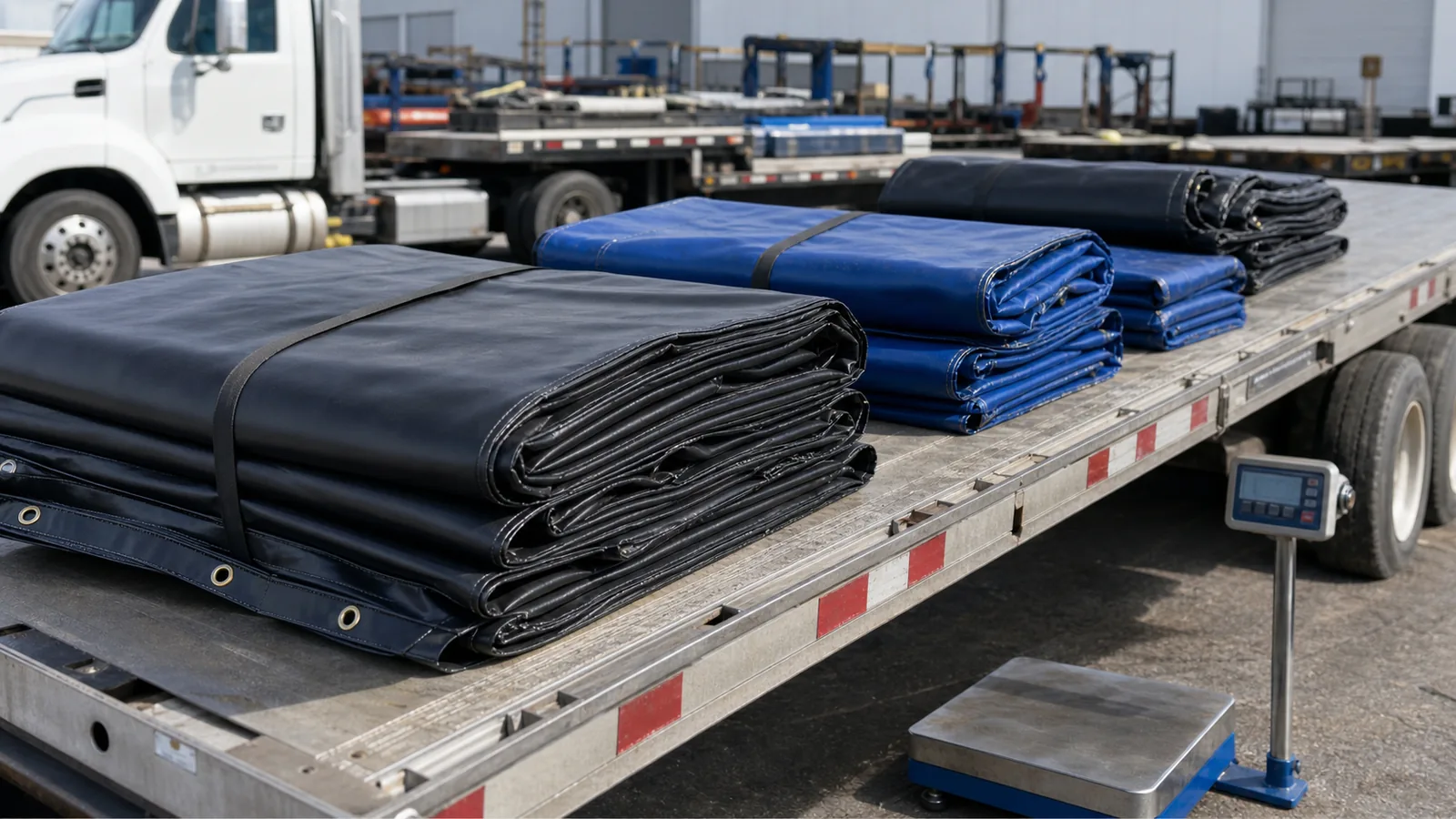
 Flatbed tarps can weigh anywhere from about 40 lb for a smaller steel tarp to more than 120 lb for a large heavy-duty lumber tarp. The exact weight depends on the tarp size, fabric weight, coating, hems, D-rings, webbing, flaps, drop length and reinforcement layout.
For B2B buyers, the question is not only how heavy a tarp is. The more useful question is whether the tarp weight matches the load, route, handling method and replacement cycle. A tarp that is too light may wear out quickly on sharp or high-friction cargo. A tarp that is too heavy may slow down drivers, increase handling risk and raise freight cost.
This guide explains the common weight ranges for flatbed tarps, why weight changes so much between products, and how procurement teams can estimate weight before requesting a quote.
I. Quick Answer: Typical Flatbed Tarp Weight Ranges
Most flatbed tarps used for transport fall into a practical weight range of about 40-120 lb per piece. Smaller steel tarps are often easier to handle, while large lumber tarps with deep drops and flaps can be much heavier.
| Tarp Type | Common Size Range | Typical Weight Range | Common Use |
|---|---|---|---|
| Steel tarp | 16 ft x 16 ft to 24 ft x 27 ft | 40-80 lb | Steel, metal, machinery and lower-profile loads |
| Lumber tarp | 20 ft x 27 ft to 24 ft x 27 ft or larger | 75-120+ lb | Lumber, building materials and taller stacked cargo |
| Smoke tarp | 10 ft x 12 ft to 16 ft x 16 ft | 20-45 lb | Front load protection against smoke, dust and road spray |
| Coil tarp | Custom fitted shape | Varies by design | Steel coils and rounded cargo protection |
These ranges are only planning references. A finished tarp made from the same base fabric can still weigh more if it includes reinforced corners, extra D-rings, webbing, wear pads, flap systems or multiple welded seams.
If you are sourcing finished flatbed truck tarps for a fleet or distributor program, weight should be confirmed during specification review, not guessed only from the product name.
II. What Makes a Flatbed Tarp Heavy or Light?
Flatbed tarp weight is mainly controlled by fabric area and material construction. However, the finished weight is also affected by several details that buyers sometimes overlook.
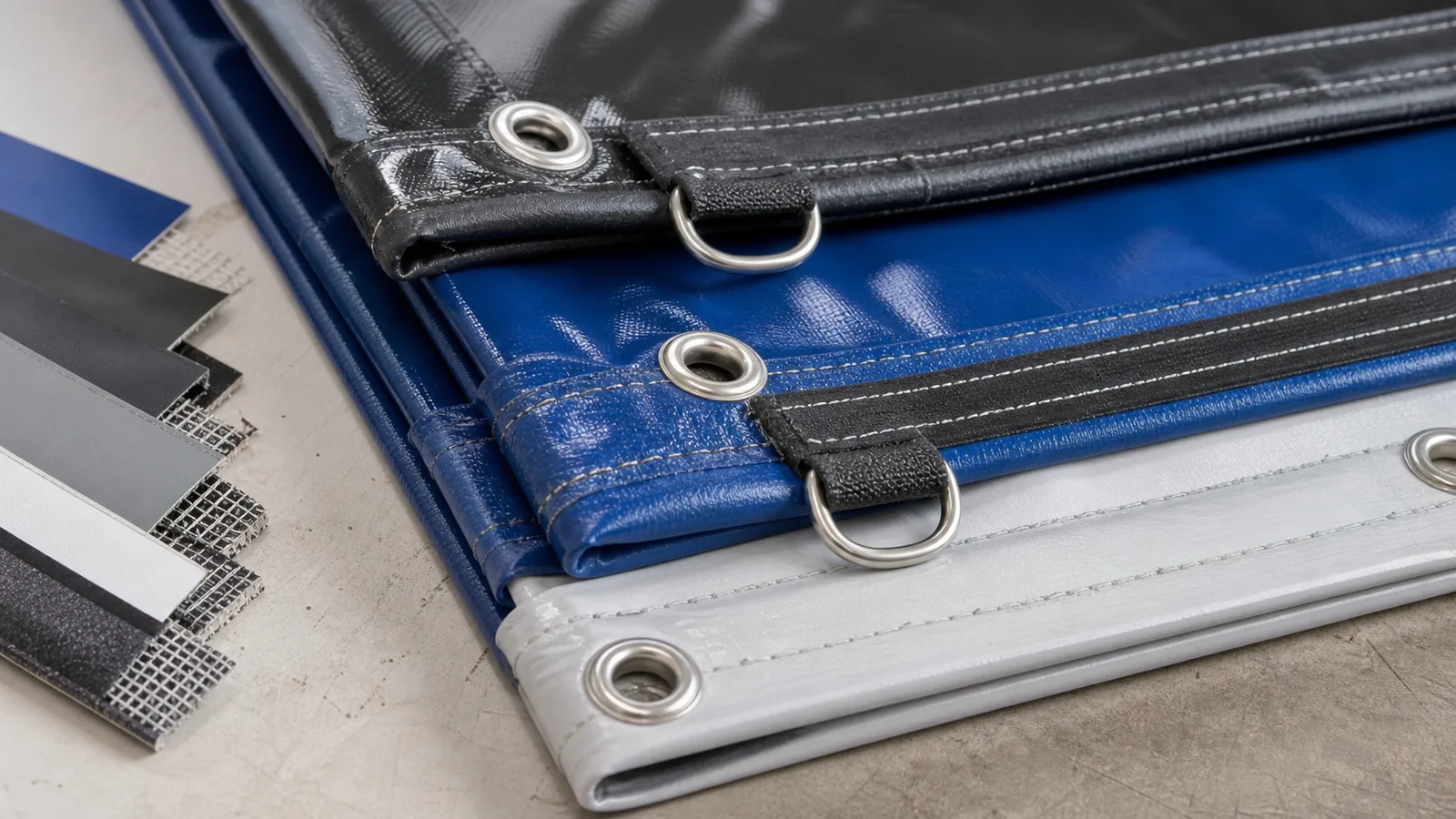
Fabric GSM or oz rating
Heavier PVC coated fabrics usually provide stronger abrasion resistance, tear strength and outdoor durability, but they also increase the final tarp weight. A light-duty cover may be easier to fold, while a heavy-duty truck tarp is better suited for demanding routes and repeated loading cycles.
Tarp size and drop length
A longer tarp or deeper side drop adds more fabric area. This is why lumber tarps are usually heavier than steel tarps. Lumber loads often need more side coverage, while steel loads may need stronger fabric in a more compact size.
Reinforced hems, corners and wear zones
Reinforcement is essential for service life, especially where the tarp touches cargo edges, trailer corners, straps or tie-down points. Reinforced hems, corner patches and wear pads add weight, but they can reduce early failure.
Hardware and finishing
D-rings, grommets, webbing, rope edges, flaps, straps and labels all contribute to the final weight. For repeat orders, these details should be standardized so each production batch stays consistent.
For projects where the buyer will cut or fabricate covers locally, tarpaulin rolls may be a better material format than finished tarps. For buyers who need ready-to-use cargo protection, finished tarps with reinforcement and hardware are usually more practical.
III. Flatbed Tarp Weight by Application: Steel, Lumber, Coil and Smoke
Different cargo types create different tarp weight requirements. A procurement team should avoid choosing one universal tarp for every load unless the fleet truly carries similar cargo under similar route conditions.
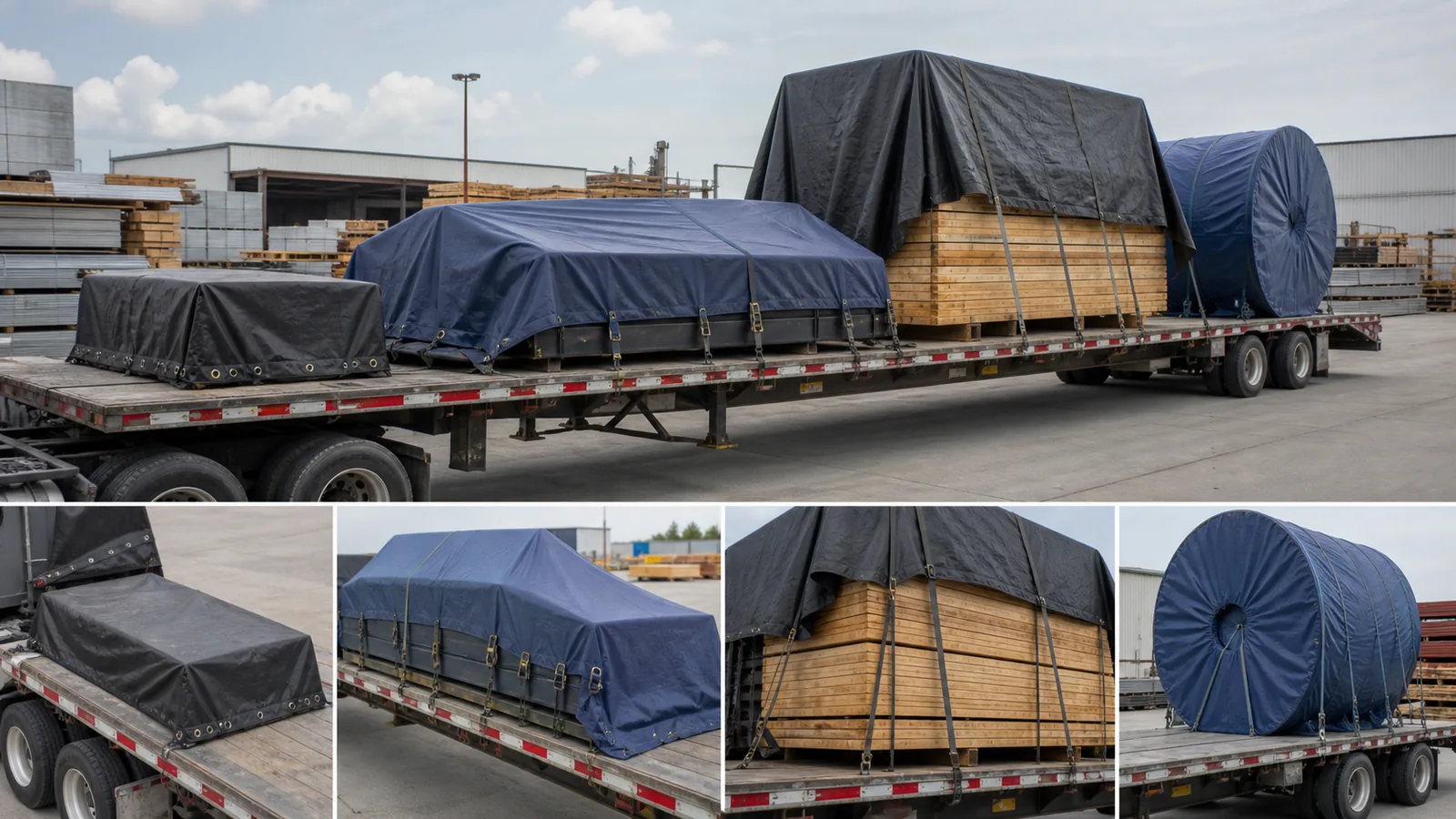
Steel tarps
Steel tarps are often smaller than lumber tarps because steel loads may sit lower on the trailer. They still need strong waterproofing, abrasion resistance and secure tie-down points. The weight is usually moderate compared with large lumber covers, but the fabric should not be too weak for metal edges.
Lumber tarps
Lumber tarps are usually heavier because they need larger dimensions, side drops and sometimes end flaps. The added coverage helps protect stacked timber, plywood, drywall and building materials from rain and road exposure.
Coil tarps
Coil tarps may use a fitted shape instead of a simple rectangle. Their weight depends on diameter, coverage area, fabric choice and reinforcement around high-contact zones. For steel coil transport, fit and tie-down layout matter as much as total weight.
Smoke tarps
Smoke tarps are generally lighter because they cover a smaller front area of the load. They are used to reduce exposure to smoke, dust, exhaust, road spray and airflow at the front of the trailer.
When a buyer asks for a lighter tarp, the supplier should first confirm which application is being reduced. Removing weight from the wrong area may make the tarp easier to handle but weaker in the place where the load creates the most wear.
IV. How Weight Affects Handling, Safety and Long-Term Cost
Tarp weight affects more than the product specification. It changes how drivers handle the tarp, how quickly a fleet can cover loads, and how often the tarp may need replacement.
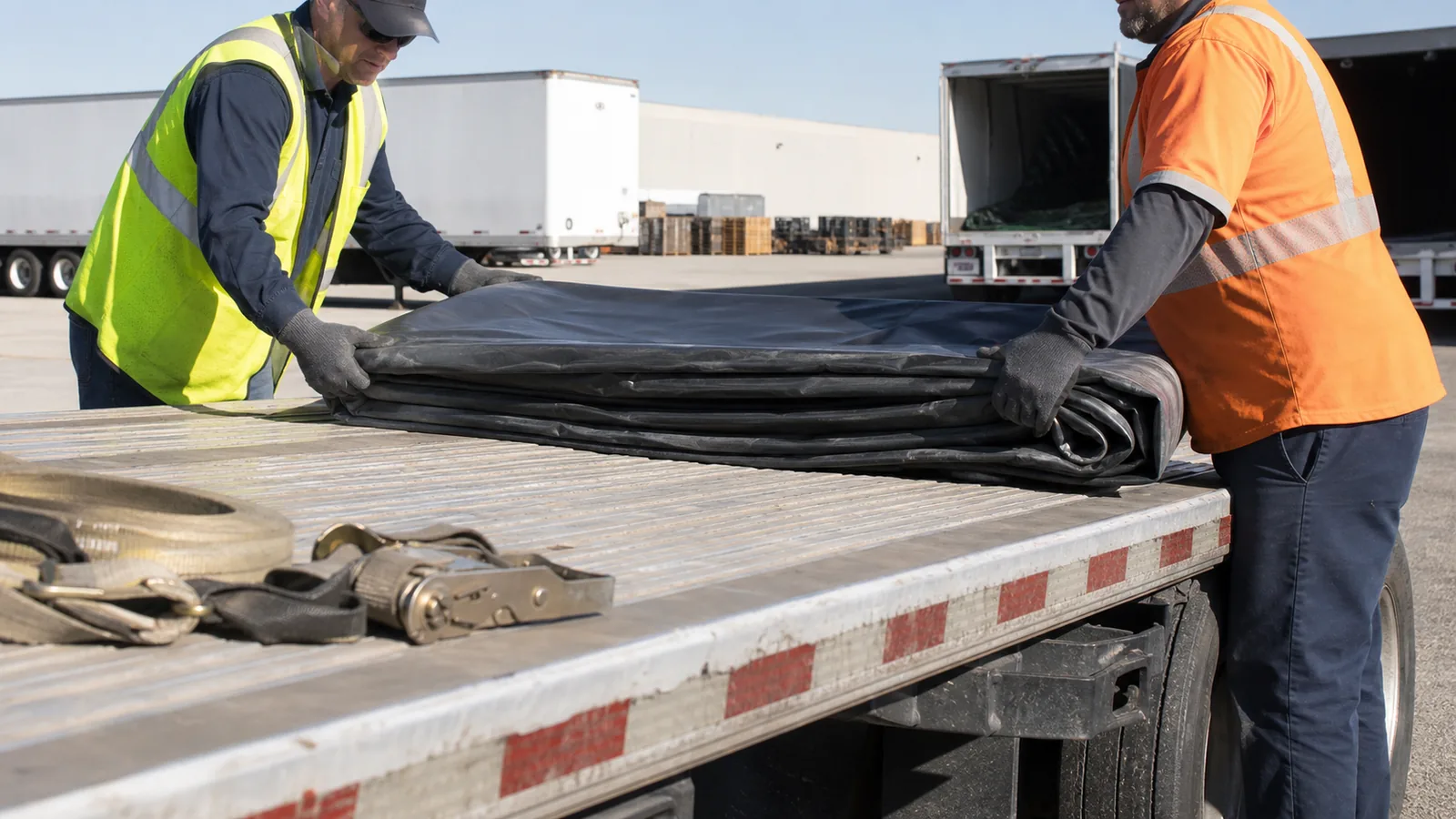
A heavy tarp can offer better durability, but it may require two-person handling, mechanical assistance or improved folding procedures. If drivers struggle to lift and position the tarp, the risk of strain, dragging damage and rushed securement increases.
A lighter tarp may reduce handling effort and speed up daily operations. However, if it is used on sharp cargo, high-wind routes or repeated long-haul service, it may tear or abrade sooner. This can raise the total cost per trip even when the initial unit price is lower.
The best specification is usually a balance between:
- Fabric strength and waterproofing
- Driver handling limits
- Load height and shape
- Route distance and climate
- Expected replacement cycle
- Order quantity and batch consistency
For fleets and distributors, it is often better to define several standard tarp types instead of forcing one tarp to cover every use case. A heavy lumber tarp, a smaller steel tarp and a front smoke tarp can each solve a different job.
V. How to Estimate Flatbed Tarp Weight Before Ordering
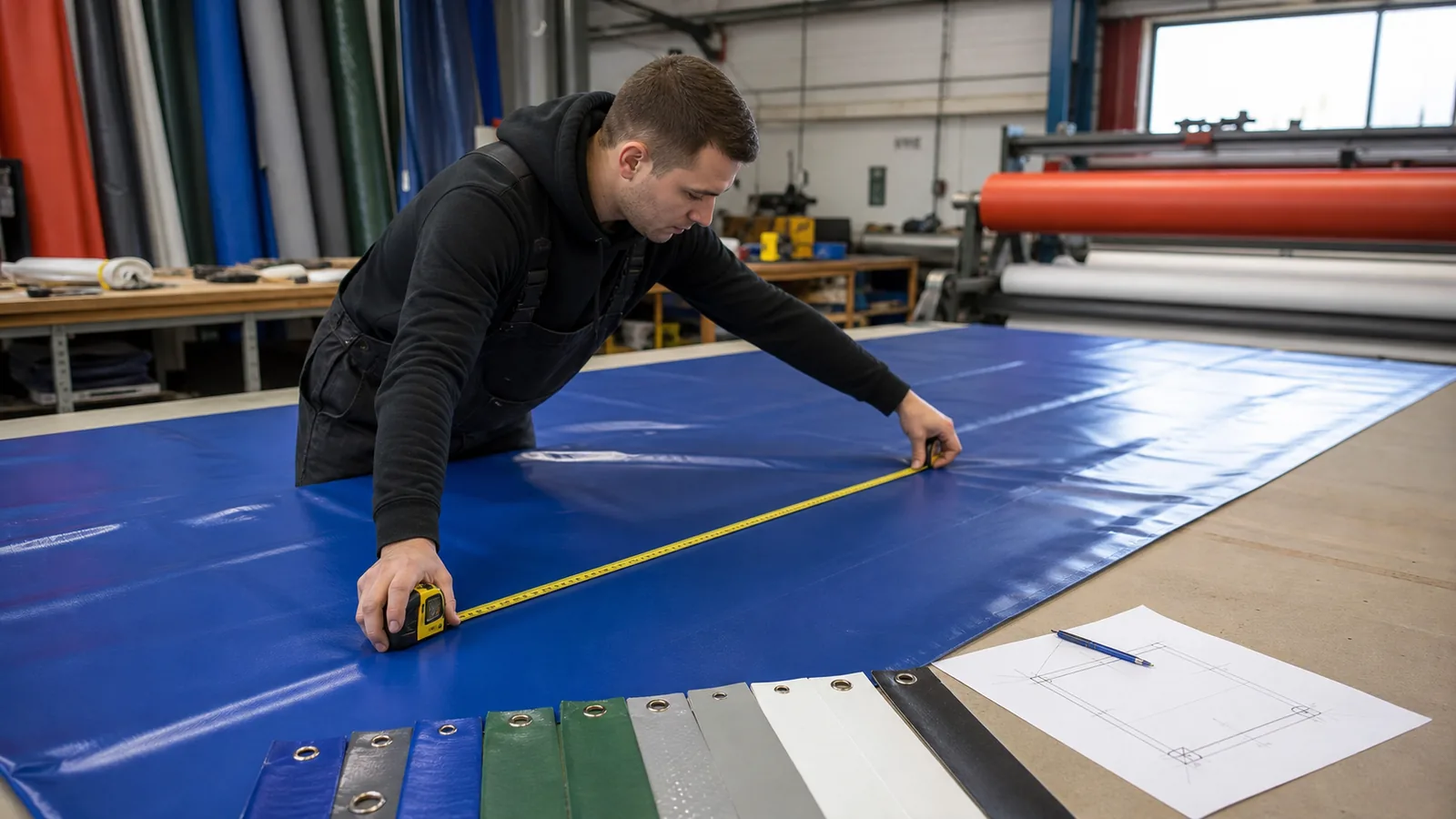 To estimate tarp weight, start with the fabric area, then add the weight of finishing and hardware. The simple planning formula is:
Estimated tarp weight = fabric area x material weight + reinforcement and hardware weight
For example, a 24 ft x 27 ft tarp has 648 square feet of fabric before hems, overlaps and reinforcements. If the buyer chooses a heavier PVC coated fabric, the base fabric weight increases. If the design adds reinforced hems, corner patches, webbing, D-rings and flaps, the finished tarp becomes heavier again.
Before asking for a final quote, prepare these details:
| Detail to Confirm | Why It Affects Weight |
|---|---|
| Finished size | Controls total fabric area |
| Drop length | Changes side coverage and total surface area |
| Material weight | Higher GSM or oz fabric increases base weight |
| Reinforcement map | Extra layers add weight but improve durability |
| D-ring and grommet spacing | More hardware adds weight and changes handling |
| Flaps, straps or webbing | Useful for securement but increases finished weight |
| Packing method | Affects shipping volume and carton or pallet planning |
If you are comparing vinyl tarps from different suppliers, make sure the comparison includes finished size, fabric weight, reinforcement and hardware. Comparing only product names can lead to misleading conclusions.
VI. Buyer Checklist Before Custom Production
For custom B2B orders, the best way to control tarp weight is to confirm the full specification before production. A clear production checklist helps reduce misunderstanding between the buyer, sales team and factory.
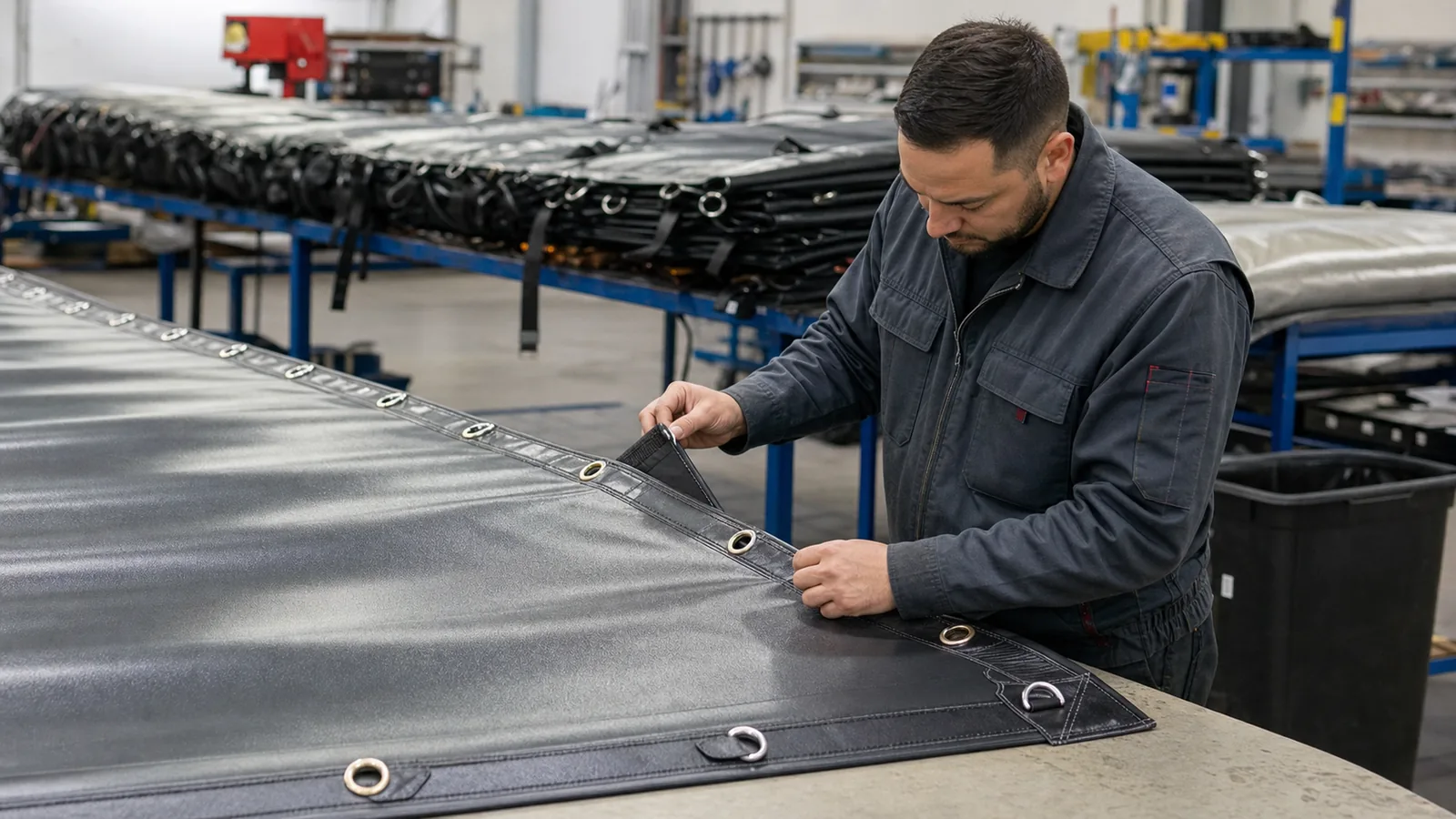
Confirm the load and trailer information
Share the trailer type, cargo category, common load height, route conditions and whether the tarp will be handled by one person or two people. Photos or sketches are useful when the load shape is irregular.
Define the material and reinforcement target
Choose whether the priority is lighter handling, stronger abrasion resistance, waterproof performance, flame retardancy, longer service life or lower unit cost. If the project needs heavy duty tarps, do not reduce weight by removing critical reinforcement zones.
Standardize repeated-order details
For fleets, distributors and wholesale buyers, standardization is valuable. The same finished size, D-ring spacing, label position, packing method and reinforcement layout make reordering easier and reduce quality disputes.
Check samples before bulk production
A pre-production sample helps buyers confirm the real handling feel, foldability, edge details, hardware layout and finished weight. For larger orders, this is more reliable than judging by the quote sheet alone.
LonaTarp supports B2B custom flatbed tarp production with PVC coated materials, welding, sewing, reinforced hems, grommets, D-rings, printing, labeling and packaging options. Standard orders are produced by specification, with a minimum order quantity of 5,000 square meters and sample confirmation available before bulk production.
VII. FAQ About Flatbed Tarp Weight
How much does a 24 ft x 27 ft flatbed tarp weigh?
A 24 ft x 27 ft flatbed tarp often weighs around 80-120 lb, depending on material weight, drop design, flaps, reinforcement and hardware. A heavy-duty lumber tarp in this size range is usually heavier than a simpler steel tarp.

Are heavier flatbed tarps always better?
No. A heavier tarp may be more durable, but it can also be harder to handle. The better choice depends on the cargo, route, driver handling method and expected service life.
Why do two tarps of the same size have different weights?
They may use different fabric weights, coating thicknesses, hems, reinforcement layers, D-rings, grommets, webbing or flap designs. Finished construction can change the final weight significantly.
Can a factory make flatbed tarps lighter?
Yes, but the supplier should first understand the load and service conditions. Weight can be reduced through material choice, reinforcement layout and hardware planning, but critical wear points should not be weakened.
What information should I send for an accurate quote?
Send the finished size, cargo type, trailer size, drop requirement, material preference, reinforcement needs, hardware spacing, quantity and packing requirements. Photos or drawings are helpful for custom shapes.
VIII. Request a Custom Flatbed Tarp Specification
If you are sourcing flatbed tarps for a fleet, distributor program or project-based transport operation, send your load type, tarp size, expected drop, material preference and order quantity. LonaTarp can help estimate finished tarp weight and recommend a practical specification before sample approval and bulk production.