When buyers ask me how to choose the right pallet cover, I usually start with one simple point: do not choose only by the cover name. In our factory, I first look at the pallet size, load type, storage condition, handling method and expected reuse cycle.
A pallet cover is a protective cover used to shield palletized goods from dust, rain, sunlight, dirt, warehouse contamination or transport exposure. For B2B buyers, the right choice is not always the thickest or most expensive option. The better choice is the cover that matches the real working condition and can be repeated consistently in bulk production.
This guide explains how I review pallet cover projects in our factory, including dimensions, material selection, waterproofing, reinforcement, handling details and sample confirmation before a larger order.
For custom pallet cover production, LonaTarp works as a B2B factory supplier rather than a retail stock seller. The normal minimum order quantity is 5,000 square meters, so the specification should be clear before sample approval and bulk production.
I. Quick Answer: Start With the Load, Not the Cover Name
The right pallet cover should fit the palletized goods without excess loose fabric, protect the load from the main risk, and remain practical for daily handling. A cover for indoor warehouse dust protection does not need the same construction as a cover used for outdoor transport or long-term yard storage.
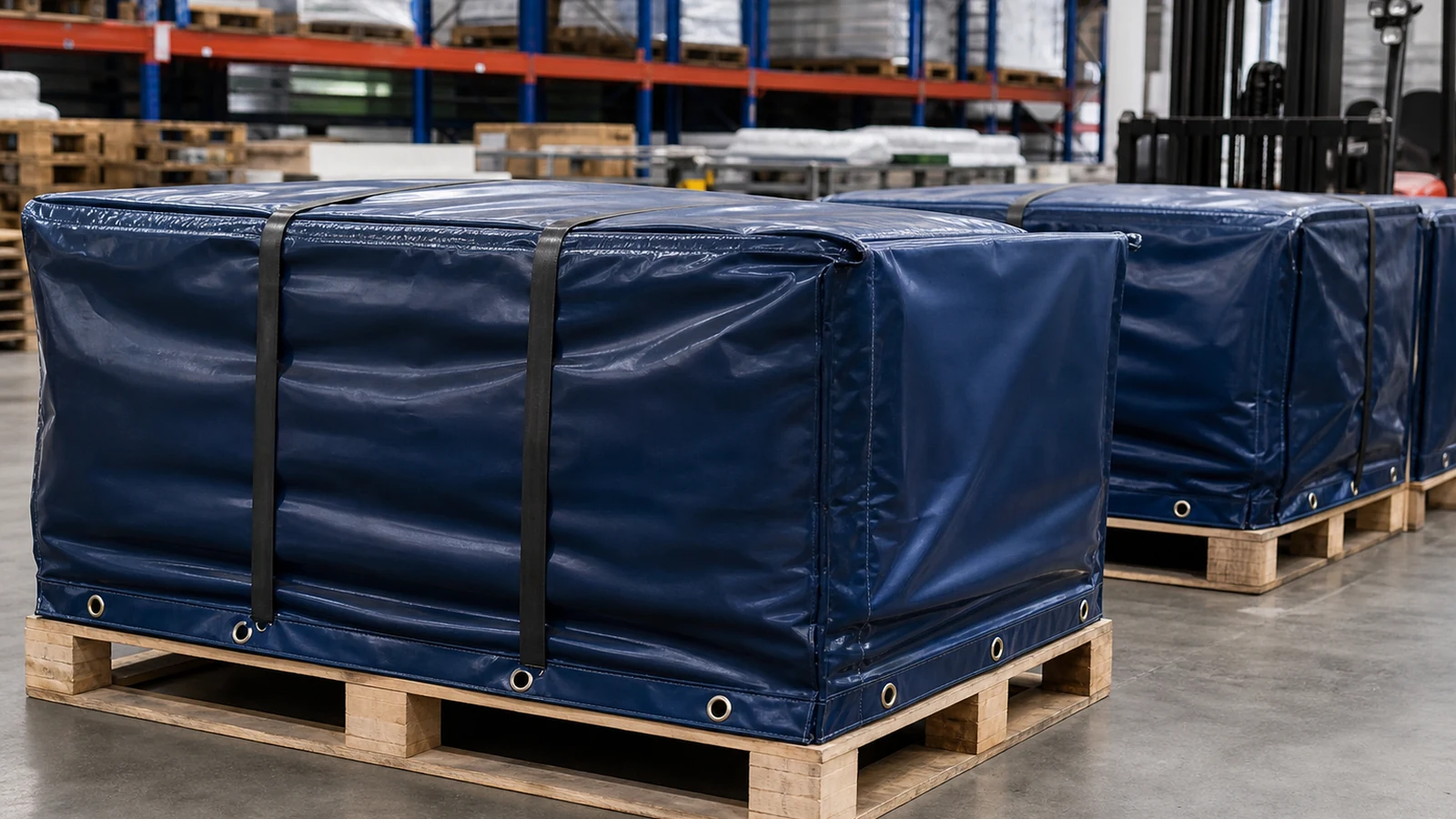
In my experience, the most common mistake is choosing a pallet cover by material thickness alone. Thickness matters, but it does not answer the whole question. Buyers also need to confirm whether the cover will be lifted frequently, folded after each use, exposed to rain, moved by forklift, or stored near sharp carton corners and metal frames.
For most B2B projects, I recommend defining the cover by these five points first:
- Finished pallet size and load height
- Main protection target, such as dust, rain, UV, dirt or abrasion
- Indoor warehouse use, outdoor storage or transport use
- Single-use, short-term reuse or long-term repeated use
- Required finishing, such as hems, straps, grommets, labels or clear windows
If your buyer team already has a standard pallet footprint, the process becomes easier. If the load height changes often, the cover should be designed with more practical tolerance.
II. Measure the Pallet Before Choosing the Cover
Before discussing fabric, we need accurate dimensions. A pallet cover is different from a flat sheet because the finished shape must fall over the sides of the load. If the cover is too tight, workers may pull too hard and damage seams or corners. If it is too loose, it can catch wind, drag on the floor or slow down handling.
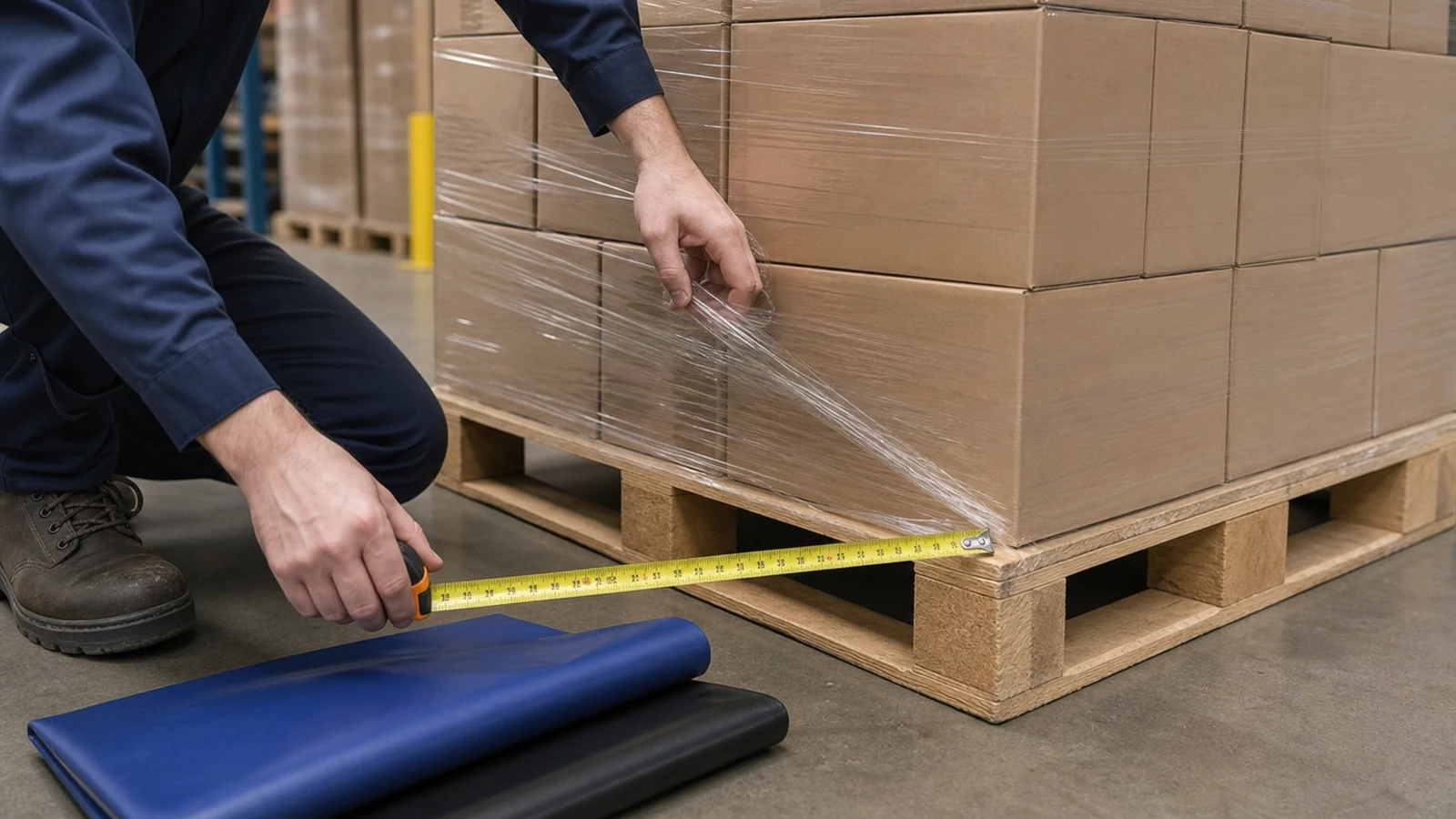
When we review a custom order, I ask the buyer to confirm pallet length, width, total load height and the required drop. The drop is important because it decides how far the cover extends down the sides. A short drop may be enough for dust control, while full-side coverage may be needed for weather protection.
| Measurement | Why It Matters | Buyer Note |
|---|---|---|
| Pallet length and width | Controls the top panel size | Use the loaded pallet size, not only the wooden pallet size |
| Load height | Controls the side coverage | Confirm the maximum height if loads vary |
| Required drop | Decides protection level and fabric use | Full drop is better for outdoor storage |
| Forklift clearance | Avoids snagging during handling | Do not let the cover drag near fork entry points |
For buyers comparing standard pallet covers, a small difference in size can affect fit more than expected. This is why I prefer to confirm a drawing, sample size or loaded pallet photo before bulk production.
III. Choose the Right Material for the Job
Material selection depends on the protection target. In our factory, PVC coated fabric is often used when buyers need stronger waterproofing, better tear resistance, welding options and repeated outdoor use. Lighter materials may work for temporary dust protection, but they should not be treated as the same solution.
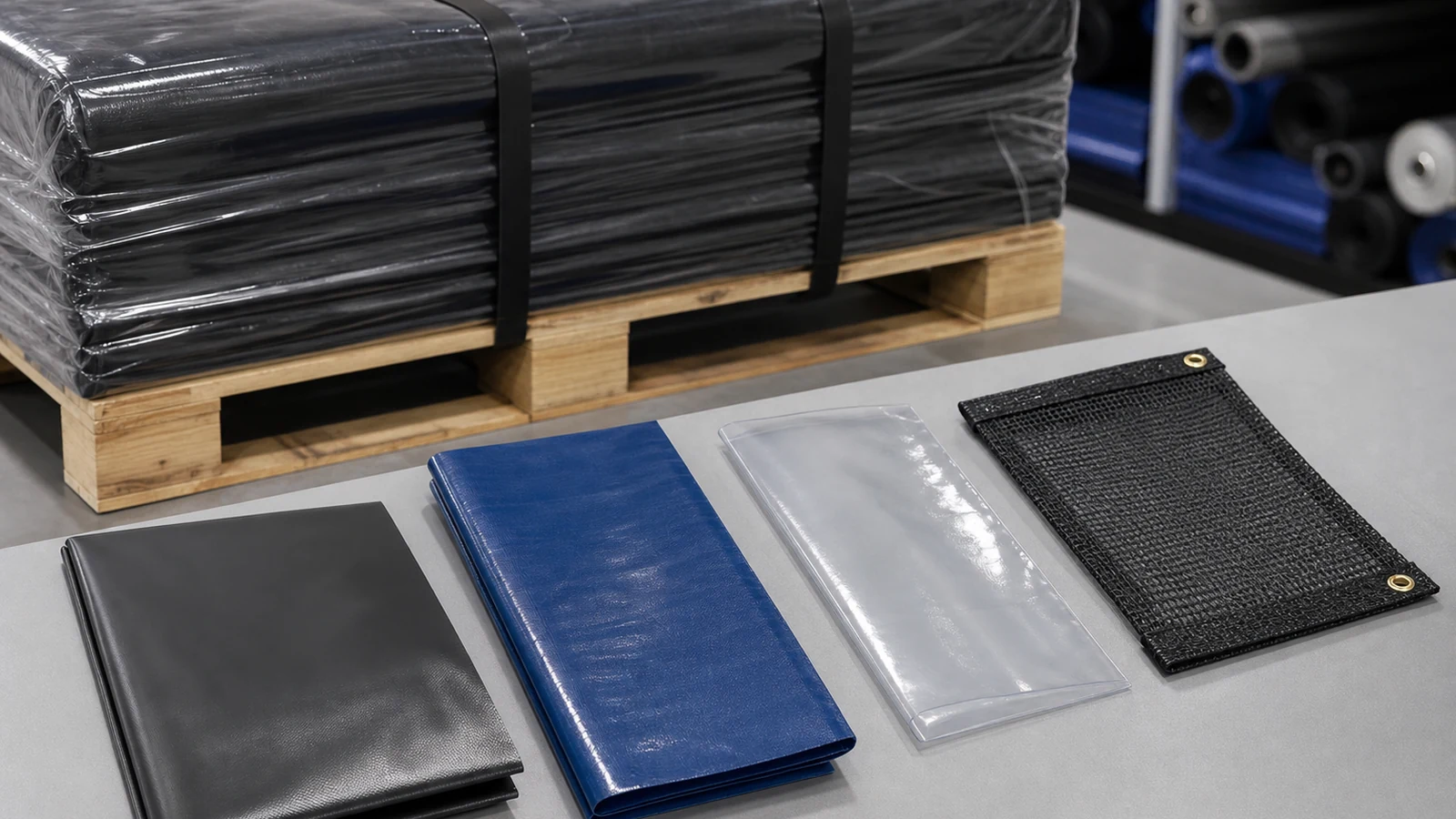
A PVC or vinyl direction is usually better when the cover must resist rain, repeated folding, warehouse friction or rough transport conditions. For buyers who already use vinyl tarps in their operation, pallet covers can often be specified with similar waterproof and reinforcement logic.
If the buyer only needs short-term indoor dust control, the cover can be lighter. If the buyer needs outdoor yard storage, sea freight staging, construction material protection or repeated logistics use, I would normally review heavier fabric, welded seams and stronger edge finishing.
IV. Match the Function to the Storage or Transport Condition
A pallet cover should be selected by the condition it must survive. Indoor warehouse protection, outdoor storage and transport handling all create different risks. A cover that works well in a clean warehouse may fail quickly when exposed to wind, rain, forklift contact and repeated folding.
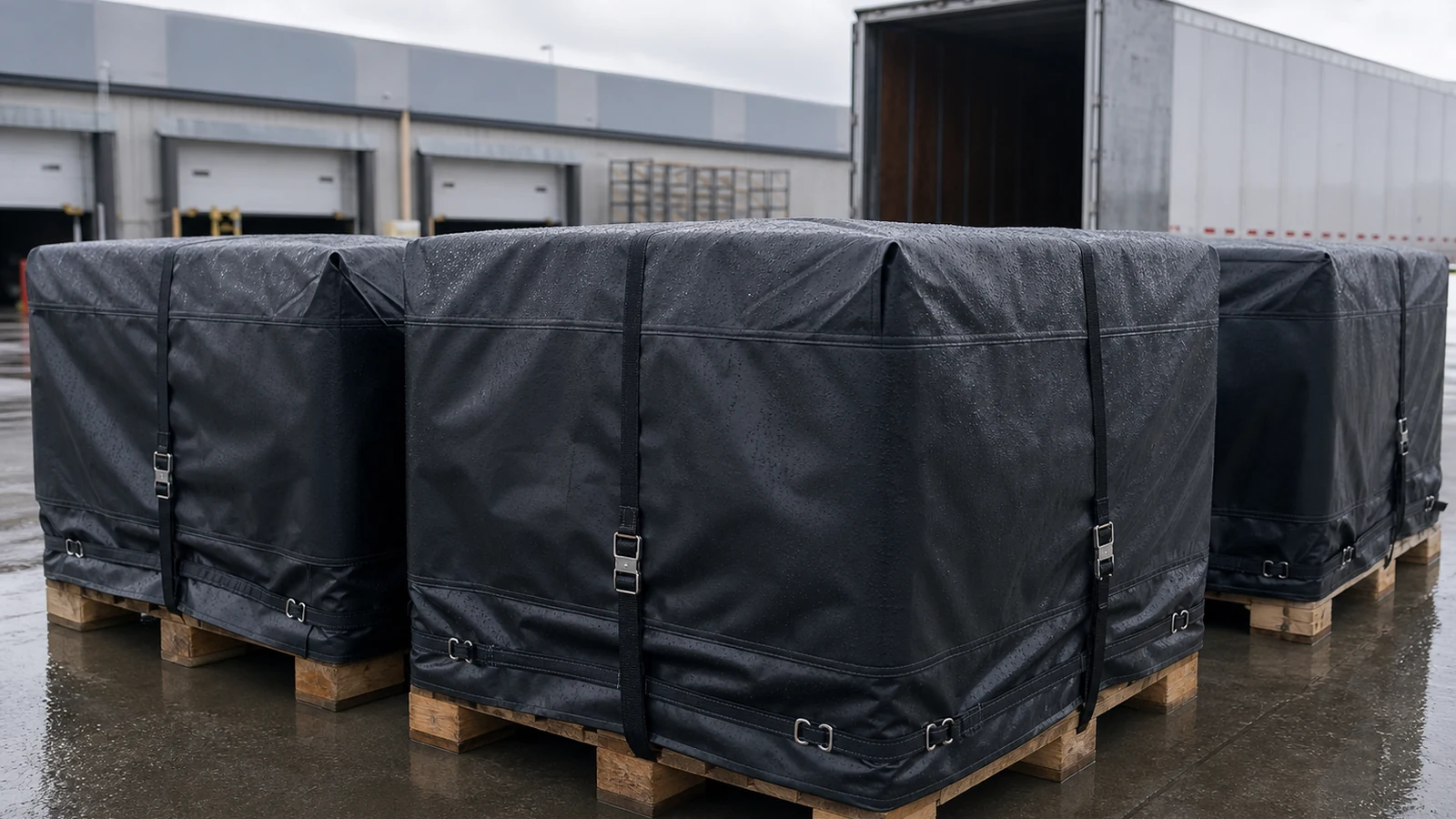
For outdoor applications, waterproofing is usually the first concern. The cover should shed rain, protect the top of the load and reduce water exposure on the sides. A related waterproof cover specification can be useful when moisture protection is more important than airflow.
For warehouse use, dust control and handling convenience may matter more than maximum fabric strength. If the pallet cover will be moved between storage zones, the design should not interfere with forklift operation, label scanning or worker handling. In some facilities, pallet covers work together with warehouse curtains to control dust, temperature zones or work area separation.
For shipping and distribution, I also look at how the cover will be secured. Loose covers may shift during movement. Straps, elastic hems, grommets or tie-down points can improve control, but they must be placed where workers can use them quickly.
For transport and logistics buyers, I also recommend checking the full handling chain. A pallet may move from warehouse storage to truck loading, cross-dock transfer and temporary outdoor staging before it reaches the final customer. If the cover only works in one step but fails during transfer, the buyer may still face water marks, dust contamination or damaged packaging. This is why I prefer to confirm the route, not only the warehouse condition.
V. Custom Details That Affect Fit, Cost and Reuse
Custom details decide whether a pallet cover is easy to use every day. Many buyers focus on fabric first, but the finishing details often decide the real service life. In our production review, I check the seam method, edge reinforcement, corner stress, hardware spacing and packing method before confirming a production plan.
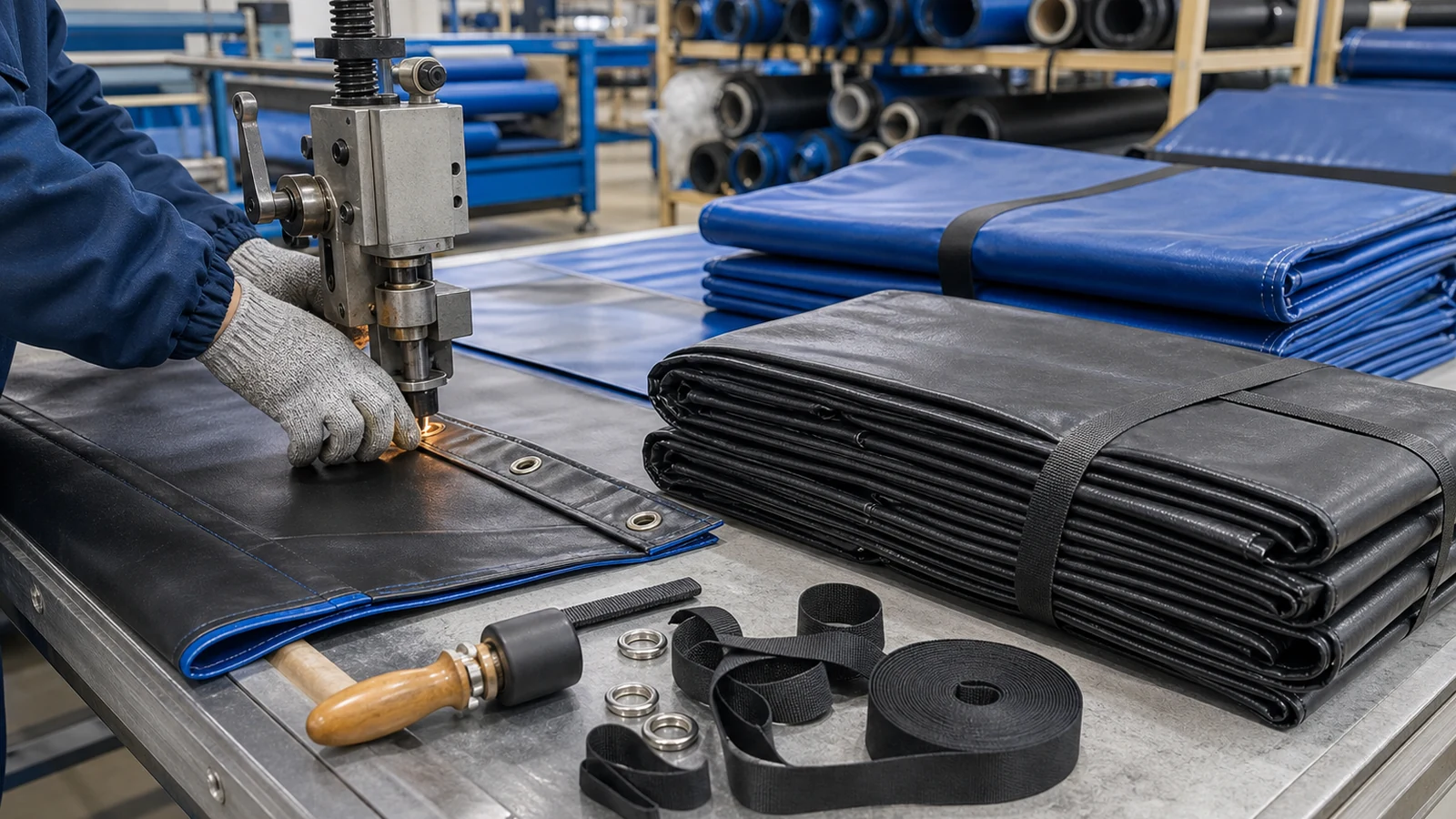
For reusable covers, reinforced corners are important because workers usually pull the cover from the corners first. If the corners are weak, the cover may fail even when the main fabric is still strong. For covers that need tighter control, straps or grommets may be added, but the buyer should confirm how workers will fasten them in real use.
Some buyers need clear windows for labels, printed batch markings or color-coded covers for warehouse management. These options can be useful, but they should be standardized before bulk production. If every department changes the detail later, the factory will have difficulty keeping the order consistent.
When buyers need special sizes, branded covers or repeated-order consistency, a custom-made tarps workflow is usually more reliable than choosing a generic cover size. For buyers who fabricate locally, tarpaulin rolls may be a better material format than finished covers.
VI. Buyer Checklist Before Bulk Ordering
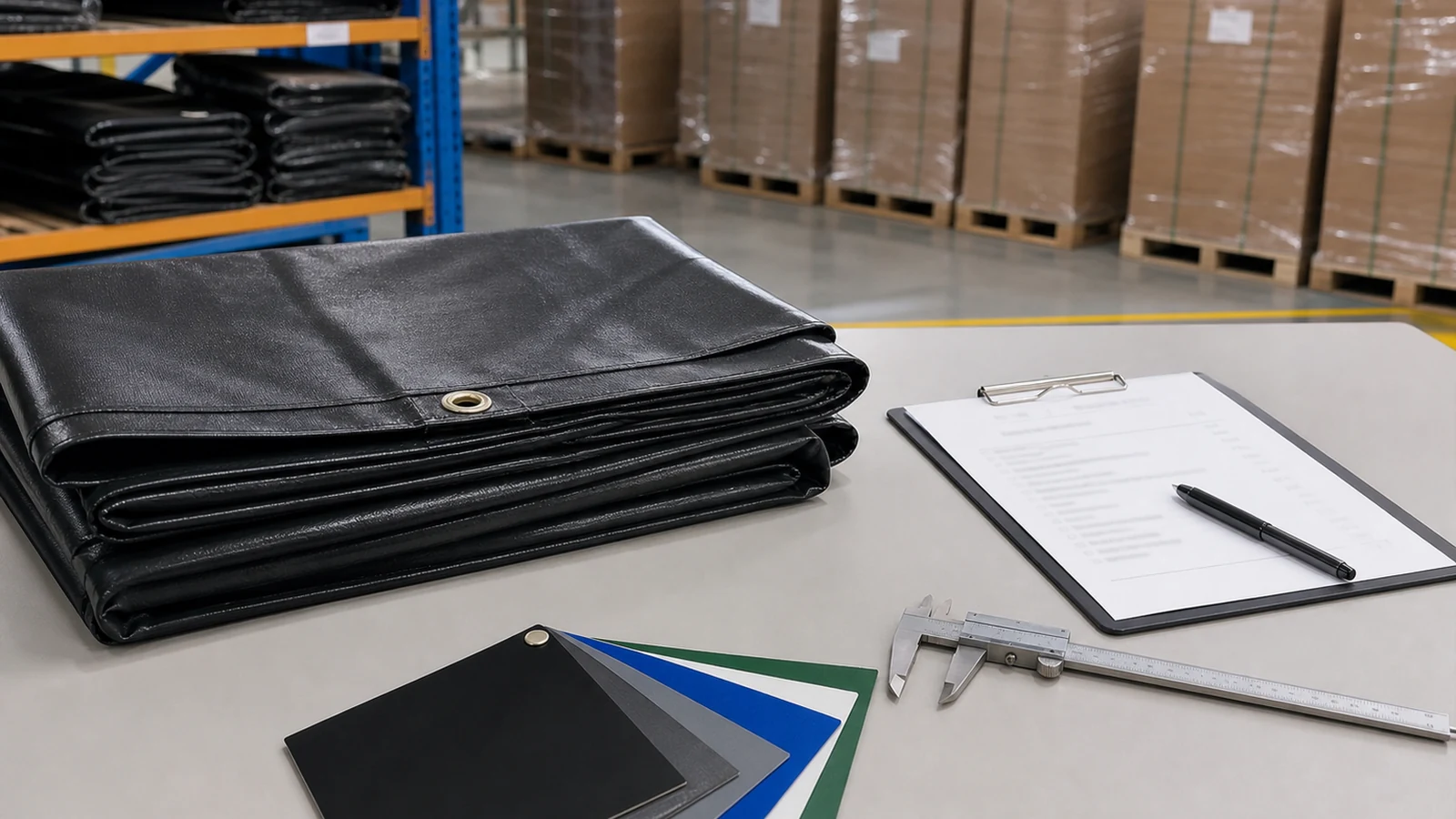
Before a buyer places a bulk order, I recommend confirming the specification in writing and checking a sample when possible. A pallet cover may look simple, but small differences in size, welding, corners and fastening can create problems after the order reaches the warehouse.
Confirm the real use environment
Tell the supplier whether the cover will be used indoors, outdoors, during transport, near sharp edges or in repeated warehouse handling. This affects fabric weight, coating, seam method and reinforcement.
Confirm the finished size
Send the loaded pallet dimensions, not only the pallet base size. If the goods overhang the pallet, the cover must be designed for the real outside dimensions.
Confirm sample and tolerance
For larger B2B orders, I prefer sample confirmation before bulk production. It helps the buyer check fit, folding, handling and hardware placement. It also helps the factory control repeated production with fewer disputes.
Common questions buyers ask me
Are pallet covers always waterproof? No. Waterproof performance depends on the material, coating, seam method and cover design. If waterproofing matters, specify it clearly instead of assuming every cover is waterproof.
Can pallet covers be reused? Yes, but reuse depends on fabric strength, handling method, reinforcement and the working environment. Reusable covers should be designed differently from short-term dust covers.
What information should I send for a quote? Send pallet length, width, loaded height, required drop, use environment, material preference, quantity, finishing details and photos if possible.
A good tarpaulin cover specification should reduce uncertainty for both sides. When the buyer and factory confirm the real use condition first, the final pallet cover is more likely to fit correctly, last longer and support repeat orders with consistent quality. Clear details also reduce reorder confusion.