Pickup truck bed covers protect cargo, tools, cartons, service equipment, and loose materials carried in open pickup beds. For a private driver, the question may be simple: keep rain away and make the truck look neat. For a B2B buyer, the question is more serious: will the cover fit different truck models, survive daily handling, and stay consistent across repeat orders?
When I review pickup truck bed cover inquiries, I try to understand the work routine before I discuss fabric. A contractor who opens the bed ten times a day does not need the same cover as a dealer preparing a standard replacement program. A farm service team, utility fleet, and light logistics company may all use pickup trucks, but the cover design should not be copied blindly from one use to another.
This guide explains the main uses of pickup truck bed covers from a B2B purchasing and factory production point of view. The goal is to help fleet buyers, distributors, dealers, and upfitters prepare better specifications before custom production.
I. What a Pickup Truck Bed Cover Does
A pickup truck bed cover is used to close or protect the open cargo area behind the cab. It can reduce rain exposure, dust, road spray, sunlight, and casual visibility of goods in transit. It can also help keep light cargo from moving too much during daily work routes.
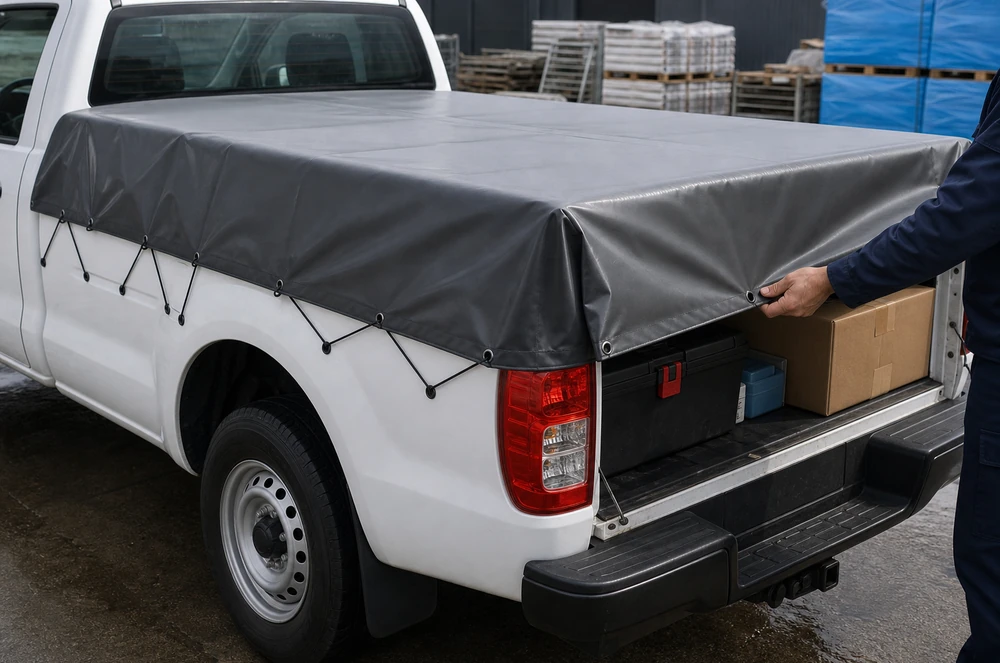
For B2B work, I separate the cover function into three layers. The first layer is protection: what needs to be protected from weather or dirt. The second layer is access: how often workers must open, fold, roll, or remove the cover. The third layer is repeatability: whether the same specification must be produced again for a fleet, dealer program, or distributor inventory.
This is different from choosing a generic consumer accessory. A commercial cover may need stronger material, more predictable dimensions, color consistency, printed identification, reinforced corners, or packing that fits warehouse distribution. A useful starting point is our pickup truck tarps page, but this article focuses on how to judge real usage before ordering.
A good bed cover should make the truck easier to operate, not only more covered. If the cover slows workers down, traps water, flaps during driving, or becomes difficult to secure after a few weeks, the specification is not doing its job.
II. Common Commercial Uses for Pickup Truck Bed Covers
Pickup truck bed covers are used by contractors, maintenance fleets, agricultural suppliers, utility service teams, delivery crews, rental operators, and dealers. Each buyer group has a different reason for covering the bed. Some protect tools and parts. Some keep cartons dry. Some need temporary cover during local transport. Some want a repeatable OEM-style cover for multiple vehicles.
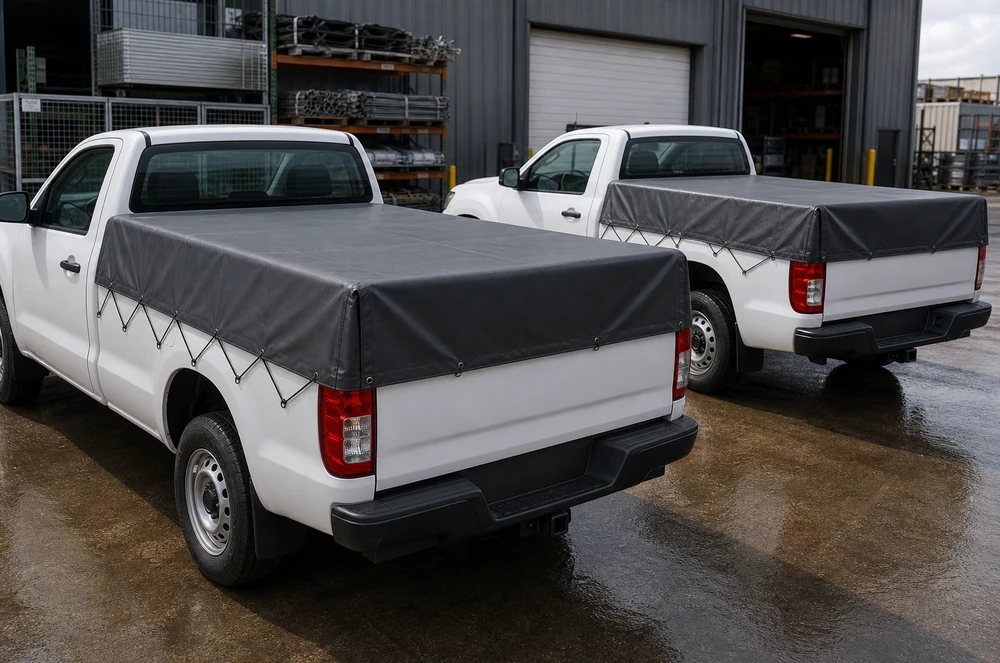
In transport and logistics projects, the cover often needs to survive road vibration, repeated opening, and outdoor parking. For contractors, the main concern may be rough tools, sharp edges, and quick access. For agricultural use, mud, rain, UV exposure, and irregular cargo shapes can be more important than a clean appearance.
I also see buyers use pickup bed covers as part of a larger vehicle upfitting program. In that case, the cover must work with racks, toolboxes, side rails, tie-down points, and rear access. If the buyer sends only the truck brand name without a drawing or photo, it is easy to miss these practical details.
The most useful question is not “which cover is best?” It is “what problem must this cover solve every working day?” Once the use case is clear, the material, edge finishing, fastening method, and packing plan become much easier to discuss.
III. Soft Covers, Custom Tarps, and Material Choices
Pickup truck bed covers can be soft, rigid, roll-up, folding, fitted, or tarp-style. LonaTarp mainly supports the fabric and custom tarp direction for B2B buyers who need flexible production, custom dimensions, waterproof materials, and repeatable specifications. This is especially useful when buyers need covers for fleets, dealers, service vehicles, or local fabrication programs.
For waterproof and repeated outdoor use, vinyl tarps and PVC coated fabric are common directions. They support welding, reinforced edges, printing, cleaning, and outdoor durability. A lighter fabric may work for simple dust protection, but it can fail quickly if workers pull it over metal tools, sharp cartons, or uneven cargo.
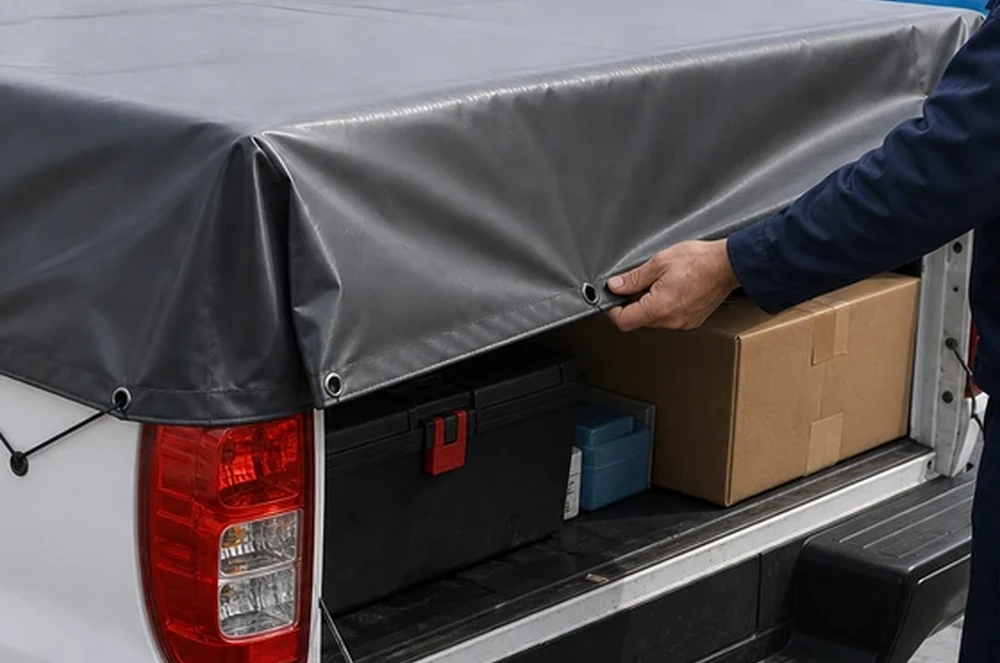
The material should also match the way the cover opens. A roll-up cover needs flexibility and surface stability. A removable tarp needs enough strength around the fixing points. A fitted cover should keep its shape around corners and rails. If the design requires straps, grommets, hooks, elastic, or Velcro, those details should be planned with the fabric rather than added as an afterthought.
| Buyer situation | Better cover direction | Specification note |
|---|---|---|
| Daily service tools and parts | Flexible waterproof PVC cover | Confirm tool abrasion and opening frequency |
| Dealer or fleet repeat program | Standardized custom-made cover | Use one approved sample and fixed packing rules |
| Outdoor parking and rain exposure | Waterproof cover with strong edge support | Review drainage and fastening against wind lift |
| Local fabrication or upfitting | Roll material or semi-finished panels | Confirm roll width, cutting loss, and welding method |
If a buyer needs a cover that is not a standard rectangle, I would compare the inquiry with a custom-made tarps direction. The more the cover must fit rails, racks, boxes, and access points, the more important the drawing becomes.
IV. Fit, Fastening, and Daily Handling Details
Fit is where many pickup bed cover projects succeed or fail. Truck bed length, bed width, rail height, wheel well position, toolbox location, cargo height, and rear opening all affect the final cover. Even small differences can create loose fabric, water pooling, poor fastening, or difficult access.
When our team checks a custom order, I want the buyer to confirm the fixing method early. A cover can use grommets, straps, hooks, buckles, elastic edges, rope, Velcro, or a project-specific system. The best fixing method depends on how often workers open the bed, whether the truck drives long distances, and whether the cargo changes shape during the day.
Water control is also a practical issue. A waterproof cover can keep cargo dry only when the cover has the right slope, overlap, and fastening. If the cover is flat and loose, rain can pool in the center. If the edge is not secured, wind can push water under the cover while driving.
Handling should not be ignored. If workers must remove the cover several times a day, a very heavy construction may reduce compliance. If the cover stays installed for long periods, heavier material and stronger reinforcement may be more useful. I usually ask whether the cover is removed daily, weekly, or only during maintenance.
V. What B2B Buyers Should Confirm Before Ordering
Before quoting a serious pickup truck bed cover order, I prefer to collect photos, dimensions, vehicle model range, expected cargo, fixing points, quantity, color, and packing requirements. If the buyer has an old cover, a sample or drawing is extremely helpful. It tells the factory what already works and what needs improvement.
LonaTarp works as a custom B2B supplier, not a retail store. The normal minimum order quantity is 5,000 square meters, so it is better to confirm the sample and production sheet before bulk manufacturing. For a fleet or dealer program, one approved sample can prevent repeated disputes in later batches.
The production sheet should include finished size, fabric weight, color, edge finishing, reinforcement map, hardware spacing, label requirement, folding method, carton or pallet packing, and any logo printing. I also recommend keeping sample photos with the written specification, because photos help different teams recognize the same details months later.
A buyer should also decide whether the cover is meant for finished product supply, local installation, or local fabrication. These three purchasing models require different packing and quality control. Finished covers need stricter fit checking. Fabricators may need roll material, cutting allowance, and welding performance. Fleet buyers usually need repeatability and fast distribution.
Questions buyers often ask
Are pickup truck bed covers always waterproof? Not always. Some covers are mainly for dust, cargo visibility, or light protection. If rain protection is important, the buyer should confirm PVC material, edge design, overlap, and fastening details.
Can LonaTarp make covers for different truck models? Yes, but the buyer should provide model range, bed dimensions, photos, drawings, or an approved sample. Different beds and accessories can change the final cover design.
Should I order a sample first? For fleet, dealer, or repeat B2B orders, I recommend sample confirmation before bulk production. The sample should be checked for fit, handling, fastening, material feel, and packing.
What information helps the factory quote accurately? Send the finished size, truck photos, cargo type, use environment, fixing method, quantity, color, printing needs, and packing requirements. If the cover must match an existing system, send that detail before price discussion.
A pickup truck bed cover should solve a real operating problem. When the specification matches the cargo, vehicle, workers, and repeat order plan, it becomes more than a cover: it becomes part of a reliable fleet workflow.