Ground cover tarpaulin is a protective fabric used directly on soil, gravel, concrete, farm yards, storage areas, or temporary work surfaces. Its job is not only to “cover the ground.” In a B2B project, it helps separate materials from mud, reduce moisture contact, control dust, protect surfaces, and make outdoor operations easier to manage.
I usually see problems when buyers choose ground cover tarpaulin by color or size alone. The same 10 x 20 meter cover can perform very differently depending on fabric weight, coating, drainage, edge reinforcement, grommet spacing, and how often people or equipment move across the area.
This guide explains how to think about ground cover tarpaulin before custom production. It is written for contractors, farm operators, storage-yard managers, distributors, and procurement teams who need repeatable specifications instead of a one-time retail sheet.
I. What Ground Cover Tarpaulin Actually Does
A ground cover tarpaulin creates a controlled layer between the working surface and the materials above it. On a wet jobsite, that layer can keep pallets, bags, tools, or raw materials away from mud. In a storage yard, it can reduce dirt pickup and help teams keep goods ready for transport. In agriculture, it may support temporary storage, nursery work, or equipment protection.
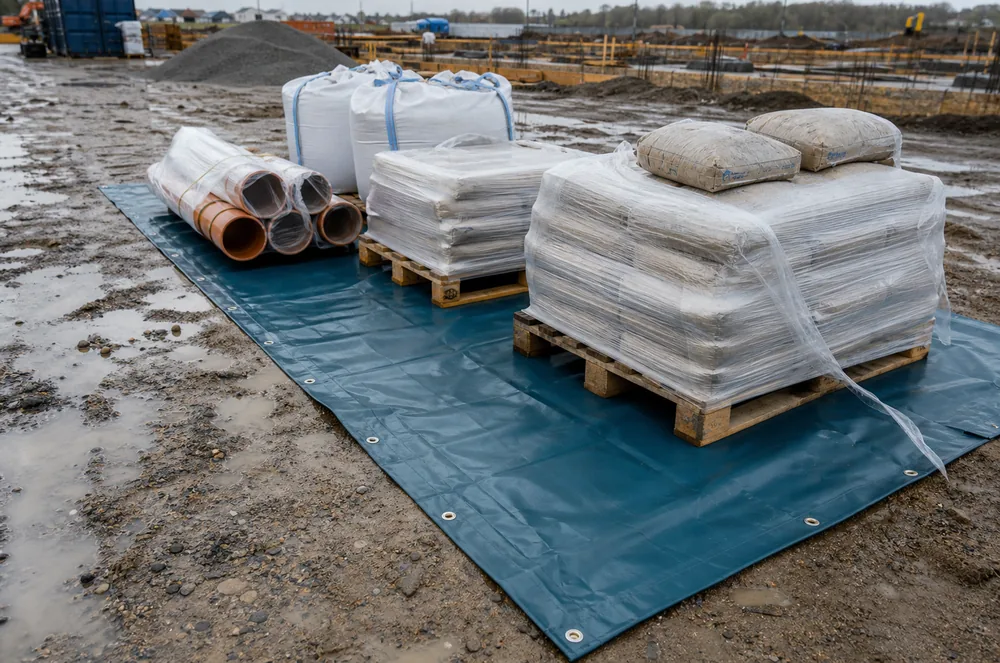
The important point is that ground cover is a function, not only a product name. Some projects need waterproof separation. Some need airflow and drainage. Some need a tough surface that can handle pulling, folding, and repeated movement. When I review a project, I first ask what the tarp is protecting from: water, soil, abrasion, sunlight, dust, or contamination.
For project buyers, this is where a dedicated ground cover tarps solution is different from a general-purpose sheet. The cover must match the ground condition and the work routine, otherwise the first failure often appears at the edge, corner, or fastening point.
II. Matching Ground Conditions to Material Choice
The material decision should start with the ground surface. A smooth concrete floor, rough gravel yard, wet soil area, and crop storage zone all create different stress. If the surface is abrasive, a light cover may wear quickly. If water collects under the cover, a fully waterproof layer may trap moisture instead of solving the problem.
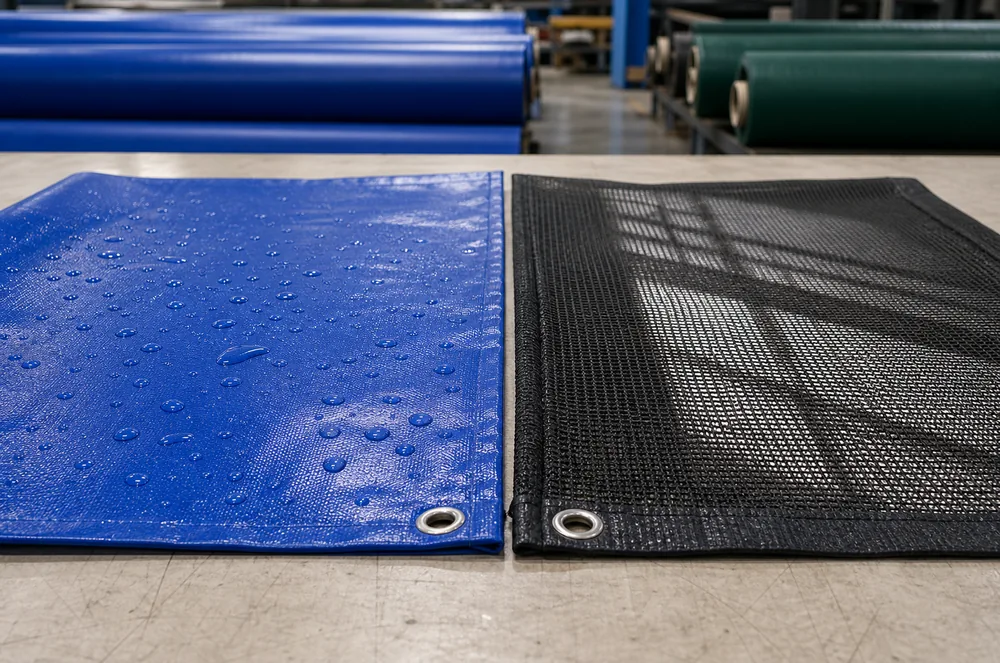
Solid PVC-coated fabric is useful when water resistance, easy cleaning, and a stronger barrier are more important than drainage. It is common for outdoor storage, material separation, temporary floor protection, and places where buyers want a cover that can be welded, hemmed, and fitted with hardware.
For this type of use, coating quality matters as much as fabric weight. If the coating is too thin or the base fabric is not stable enough, the cover may look acceptable in a sample photo but lose strength after dragging, folding, or repeated exposure. I prefer to discuss expected handling first because ground covers are often moved more roughly than top covers.
Mesh material is a better direction when water needs to pass through, wind pressure must be reduced, or airflow matters. A mesh tarp style ground cover will not behave like a waterproof sheet, but it can be easier to manage in windy or drainage-sensitive areas. This is why I do not recommend one material for every buyer before checking the site condition.
For heavier industrial work, buyers may also compare the ground cover requirement with broader waterproof cover needs. If the same project requires top covers, side covers, and ground separation, using compatible materials can make inspection and replacement easier later.
III. Where Ground Cover Tarpaulin Works Best
Ground cover tarpaulin works best where the buyer needs a temporary but repeatable working layer. In construction, it can protect stored materials and reduce mud transfer. In equipment yards, it can create a cleaner loading or maintenance area. In agricultural projects, it can help keep crates, irrigation accessories, feed bags, or tools away from wet ground.
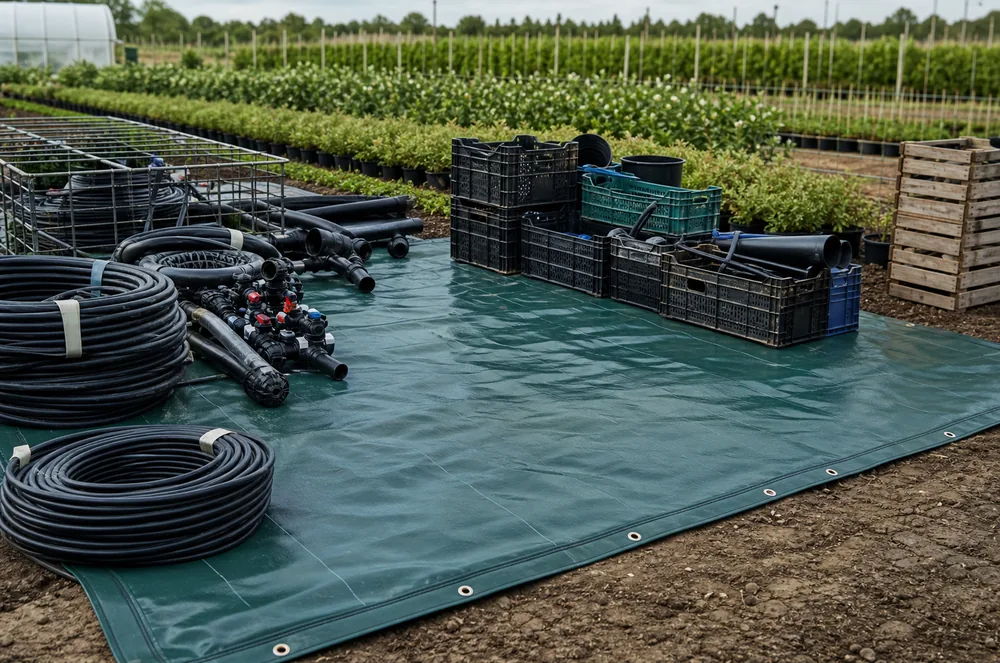
I would not treat it as permanent civil engineering flooring. If forklifts, sharp scrap, heavy tracked equipment, or continuous vehicle traffic are involved, the specification must be reviewed more carefully. A tarp can protect and separate, but it should not be oversold as a hard road mat or structural floor.
Another useful application is temporary zoning. Some buyers use different cover colors or panel sizes to separate loading areas, clean material areas, and waste handling areas. This is not only a visual decision. When a site team can identify the correct panel quickly, they are less likely to drag a dirty cover into a cleaner storage zone or use a light cover in a heavy-abrasion area.
For farm and nursery buyers, the connection with agriculture tarpaulin applications is important. UV exposure, water contact, chemical residue, soil type, and seasonal handling can all affect the fabric and edge design. A cover that works for dry carton storage may not be the right answer for a wet nursery aisle.
For building and jobsite users, the ground cover often sits inside a larger industrial and construction tarpaulin plan. The buyer may need different products for scaffolding, material storage, equipment covering, and temporary ground protection. Separating these use cases makes the quote more accurate and reduces wrong-order risk.
IV. Specifications Buyers Should Confirm Before Production
Before production, I prefer buyers to confirm the real working size, not only the theoretical area. A cover that is pulled around corners, folded over edges, or fixed with stakes may need extra allowance. If the buyer only gives the visible ground size, the finished tarp can become too tight after hemming or fastening.
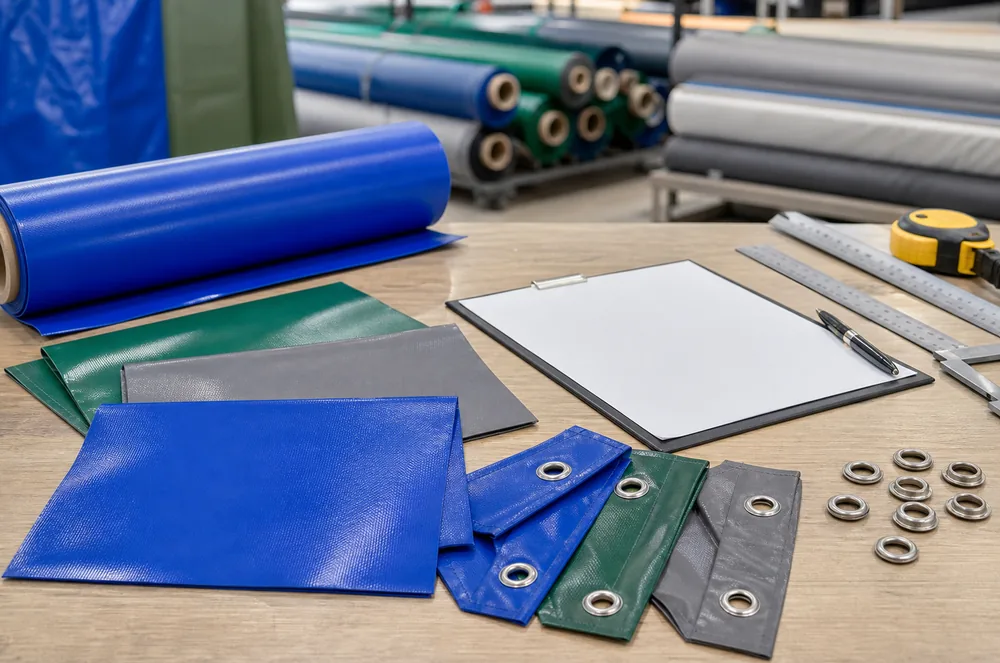
Fabric weight is another key point. Higher GSM can improve strength and handling life, but it also increases roll weight, shipping cost, and manual handling difficulty. For distributors, this affects how the product is packed, stocked, and sold to project buyers. For contractors, it affects whether workers can unfold and reposition the tarp safely.
Edge design should be treated as a specification item, not an afterthought. The middle of the sheet may still be in good condition while corners fail first because workers pull from the same point every day. Reinforced corners, proper hem width, and suitable grommet intervals can extend service life more than buyers expect, especially on rough ground.
The production route also matters. Some buyers want finished tarps with welded hems, grommets, and reinforced corners. Others buy tarpaulin rolls and finish panels locally. Both can work, but the buyer should decide early because roll width, fabric weight, color, coating, and packaging method will affect the final cost and lead time.
| Specification item | What to confirm | Why it matters |
|---|---|---|
| Ground surface | Soil, gravel, concrete, wet yard, nursery area | Changes abrasion resistance and drainage direction |
| Material direction | Solid PVC, mesh fabric, or lighter cover | Balances waterproofing, airflow, weight, and handling |
| Finished size | Usable area plus edge allowance | Prevents tight installation after welding and hemming |
| Edge design | Hem, corner patch, grommet spacing, straps | Reduces tearing at the first stress points |
| Order plan | MOQ, sample, packing, repeat sizes | Keeps bulk production consistent with project use |
For LonaTarp custom production, the normal MOQ is 5,000 square meters. I recommend sample confirmation before bulk production, especially when the buyer is not sure about fabric hand feel, grommet spacing, edge reinforcement, color, or packing method. A sample does not replace a full project test, but it can prevent many specification mistakes before the factory starts a larger order.
V. Installation Details That Protect the Cover
Even a strong ground cover tarpaulin can fail early if installation creates sharp stress. The common issues I watch for are undersized covers, corners pulled too hard, grommets used as lifting points, water trapped in low areas, and rough stones rubbing the same spot every day.
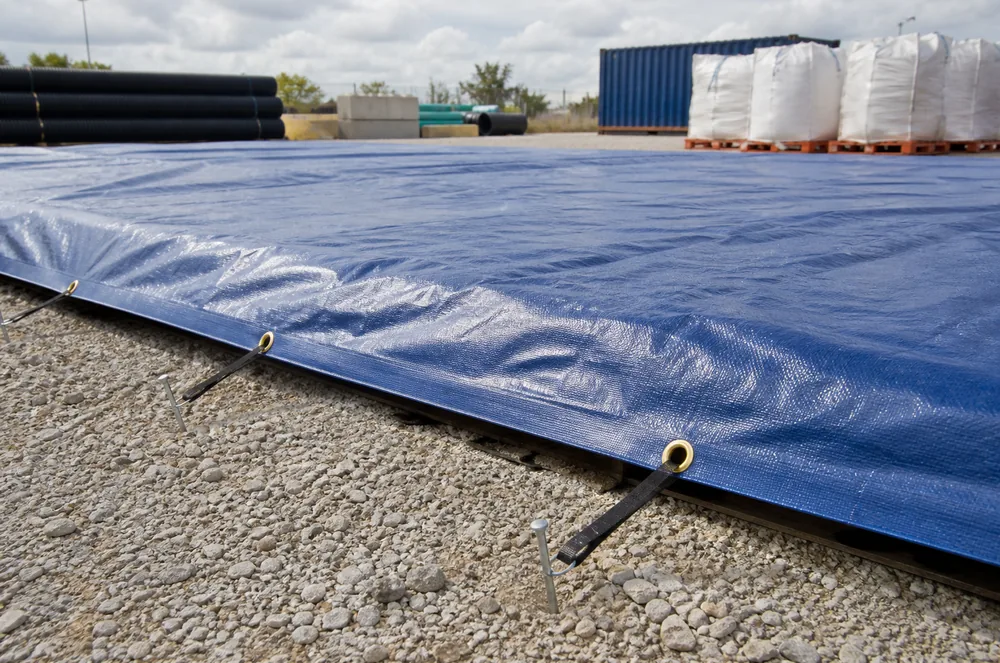
Before laying the tarp, the site team should remove sharp scrap, check drainage direction, and decide whether the cover needs fixed anchor points or only temporary positioning. If the cover will be moved often, the buyer should think about panel size and folding method. A very large single sheet may reduce seams, but it can become difficult to handle in daily work.
Drainage deserves special attention. If water runs under the cover and cannot escape, the ground can become slippery or uneven. If water sits on top of the cover, workers may pull the tarp while it is loaded with extra weight. I usually ask buyers to confirm the slope, expected rainfall, and whether the cover will stay in place for days, weeks, or only during short work periods.
For repeat orders, I suggest recording the final approved specification: finished size, material, GSM, color, edge structure, grommet spacing, packing method, and any photos from the first installation. This record is valuable because the second order can then be produced with fewer questions and less risk.
Ground cover tarpaulin is a practical product when the buyer treats it as part of a working system. The right specification should reflect the surface, moisture, abrasion, drainage, fastening, handling frequency, and order plan. If those details are clear before production, the cover is easier to use, easier to inspect, and easier to repeat for future projects.